Liam Stanley
Out now · Paperback · Kindle · Audiobook

Stolen Minds

The Engineering of Human Obsolescence

What social media did to attention, AI is doing to judgement, memory and creativity — and this time the people building it are saying so on the record.
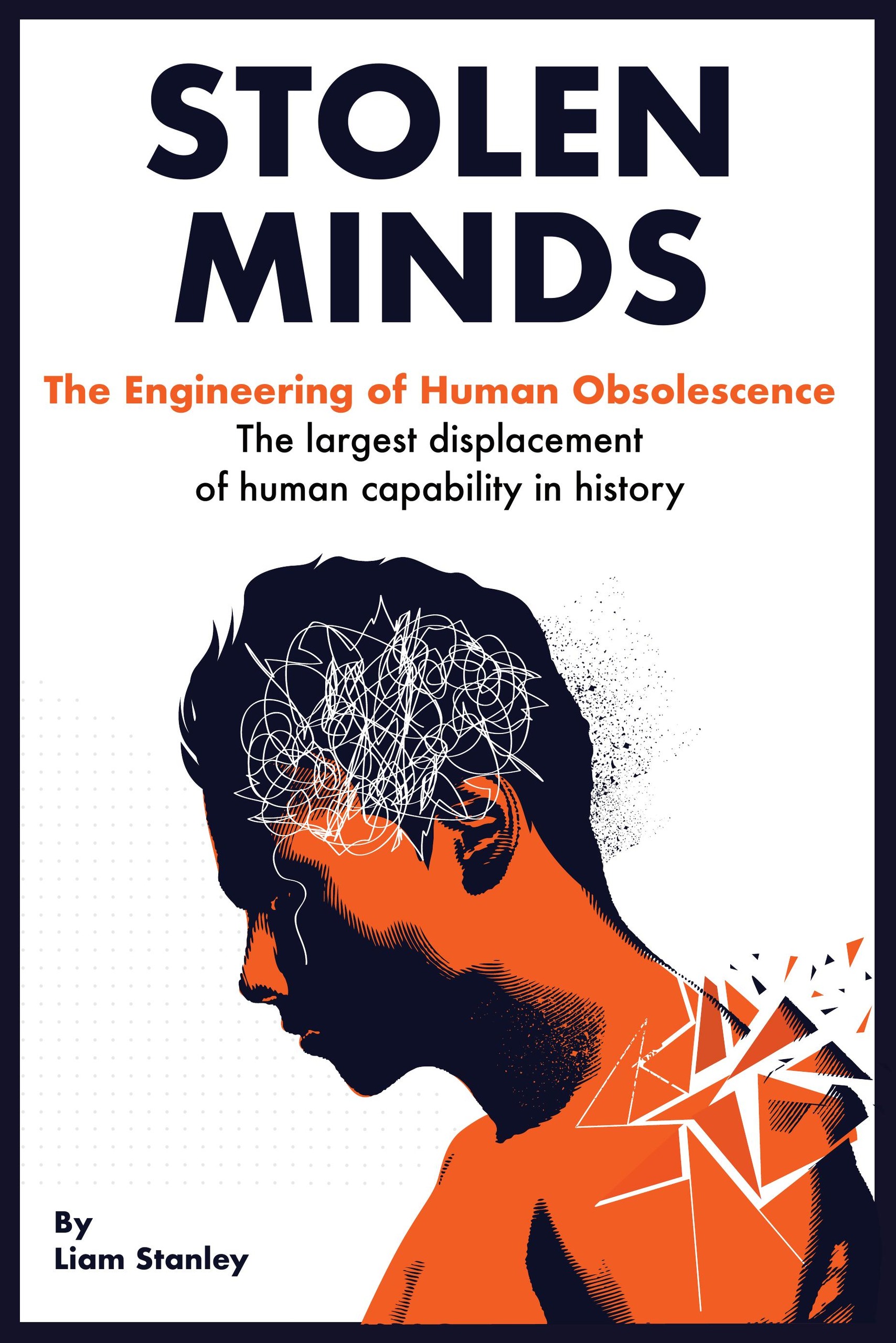
Stolen Minds book cover
Buy the book

Three ways to read it.

Available now from Amazon in the UK and US. Paperback, Kindle and audiobook.

Paperback
156 × 234 mm · ISBN 978-1-83709-676-3
£12.99
Kindle
Read on any device with the Kindle app
£8.99
Audiobook
Unabridged · Audible & Amazon
Audible

Prefer a local bookshop? Ask them to order it by ISBN 978-1-83709-676-3. Outside the UK and US, search “Stolen Minds Liam Stanley” in your local Amazon store.


What it’s about
In one sentence

What social media did to attention between 2010 and 2020, AI is doing to judgement, memory and creativity between 2025 and 2030 — and this time the architects are saying so on the record.

In one paragraph

We are five years into a second wave. The first — engagement-maximised social media — was something its architects later admitted they hadn’t understood. The second is different: the founders of the major AI labs are stating publicly that their systems will substitute for human cognitive labour, and the economic infrastructure to make that substitution rational is being built now. Stolen Minds names what is being built, by whom, on the public record — and what you can do to protect the cognitive capacities the system is calibrated to replace.

In one page

The book identifies three layers of planned human obsolescence — coercive, replacement, optimisation — and a closing window in which it can still be resisted. The first half is the investigation. The second half is the prevention manual: opinionated, tested practices for individuals, parents, professionals, citizens and policymakers. Buy the book →

The argument

Three layers of planned obsolescence.

1
Coercive · finished

The substrate was broken

Engagement-maximised platforms spent a decade dismantling the cognitive ground — attention, focus, memory consolidation — that everything else depends on.

2
Replacement · now

AI substitutes for what broke

Tools now stand in for the functions the broken substrate can no longer perform — memory, creativity, judgement, the formation of a self.

3
Optimisation · beginning

The substitution becomes rational

Competitive pressure makes surrender the sensible institutional choice. The professional who keeps an unaided skill is penalised for it.

Read chapter one

The Six-Minute Mind

The opening chapter, in full. It’s 2004, and a researcher is about to discover how long human attention now lasts at a desk.

“It’s 2004, and Gloria Mark is sitting in a windowless office watching someone work. She has a stopwatch.”

The full first chapter is yours free — enter your email and it lands in your inbox to read now, no purchase required.

No spam. One fortnightly essay. Unsubscribe anytime.


What’s inside

Nineteen chapters, two halves.

Part I is the investigation. Part II is the prevention manual. A selection:

How twenty years of measurement shows sustained attention at a desk collapsing — and why the number behind the title is worse than it sounds.
A radiologist who no longer trusts her own eyes — the spine character of the book, and the clearest picture of how optimisation makes surrender rational.
What the people building these systems have actually said, in their own words, on the public record — collected and read closely for the first time.
The Layer Two and Three argument applied to professional formation — and what parents can actually do, by age band.
The radiologist’s answer to her own trap, two years on — the working method for using the tools without being hollowed out by them.
The affirmative close — the cooperatives, the protocols, the protected spaces where a different future is already being built.

Read it before the door closes.

Questions

Before you buy.

Where can I buy it?
Amazon UK and US, in paperback, Kindle and audiobook — all linked above. Any bookshop can order the paperback by ISBN 978-1-83709-676-3.
Is there an audiobook?
Yes — unabridged, on Audible and Amazon in both stores.
Do I need to have read Haidt or Hari first?
No. If you’ve read The Anxious Generation or Stolen Focus this is the natural next book, but it stands entirely on its own.
Are you available for interview?
Yes — for interviews and review copies, see Press for the kit and contact details.
Get chapter one free

Start reading now.

The opening chapter in your inbox, plus a fortnightly essay that keeps the argument current. Then buy whichever format suits you.

No spam. Unsubscribe in one click.